
December 12, 2025
What You Need to Know About Energy-Efficient Upgrades
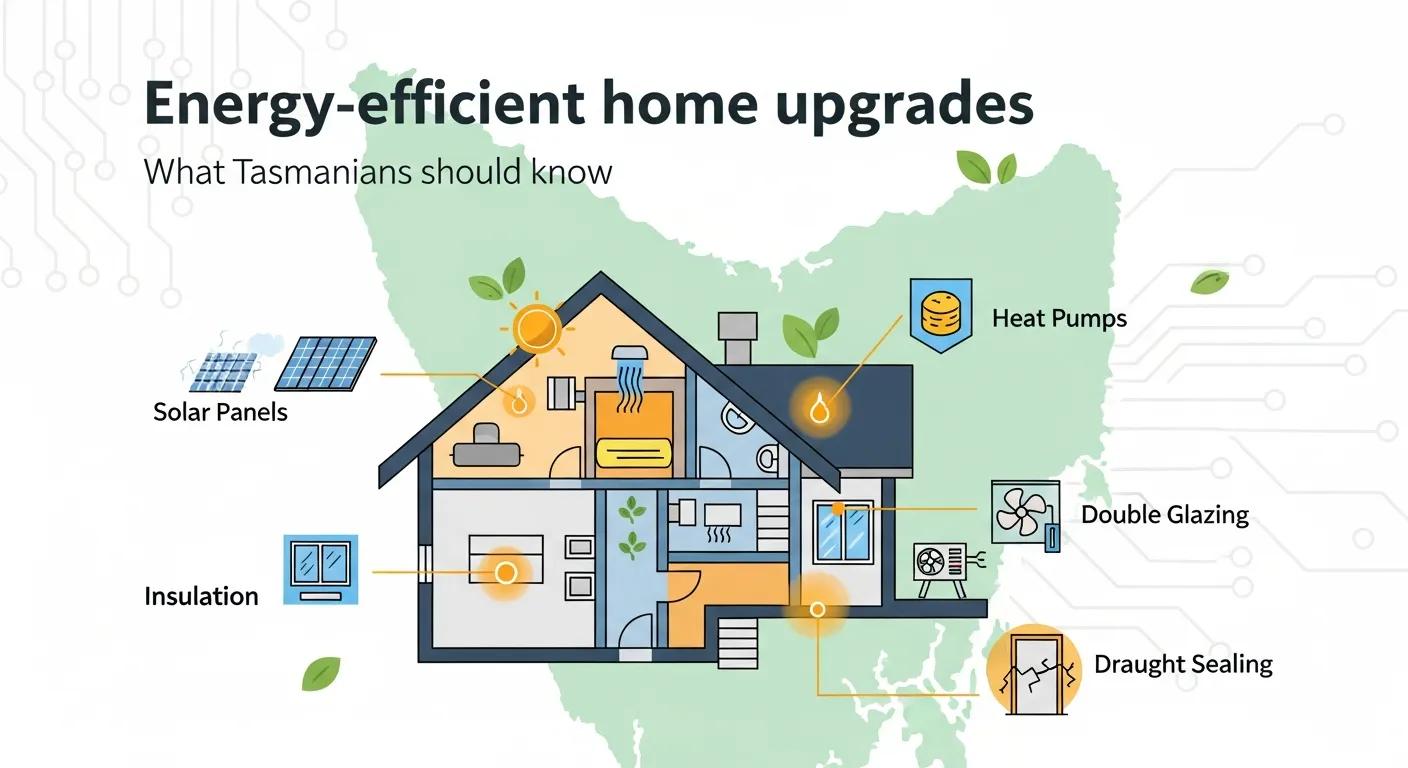
Energy‑efficient home upgrades — what Tasmanians should know
Energy‑efficient upgrades are smart improvements to your home’s structure, heating and cooling systems, and controls. They’re designed to cut energy use while making your living spaces more comfortable and adding value over time. In Tasmania’s cool, maritime climate, sensible changes to your building’s exterior and heating systems can significantly reduce winter heating needs, lower your bills, and limit condensation and draughts that can make your home feel less cosy. This guide will walk you through the measures that often deliver the biggest returns in Northern Tasmania — from attic and wall insulation to heat pumps, double‑glazed windows, solar PV, and smart thermostats — and explain how they work together to deliver dependable savings. You’ll learn how upgrades can save you money and reduce your carbon footprint, which combinations suit homes and businesses in Devonport, Burnie, and Ulverstone, and how to approach financing and available incentives. Practical steps, comparative tables, and checklists are here to help homeowners and commercial decision‑makers prioritise actions and get started with site assessments and local contractors.
Why energy‑efficient upgrades matter for Tasmanian homes and businesses
Upgrades that improve energy efficiency can lower running costs, make indoor conditions more comfortable year-round, and shrink a building’s carbon footprint by reducing unnecessary heat loss and wasteful energy use. They achieve this by tightening the building envelope, replacing old heating and cooling with higher‑efficiency systems, and adding on‑site generation or storage so less grid power is needed. The combined effect is often smaller energy bills, fewer cold spots, and better indoor air quality — all important in Tasmania’s cooler coastal and inland microclimates. Understanding these core benefits helps owners choose the interventions that can deliver the best returns first.
Energy efficiency can deliver clear outcomes for households and commercial fit‑outs across the region:
- Lower utility bills through reduced heating and peak demand.
- Improved occupant comfort by removing draughts and cold floors.
- Reduced operational carbon and stronger market appeal for the property.
- Potentially lower maintenance when systems are modern and properly specified.
These benefits often become clear when specific measures — such as insulation, heat pumps, and smart controls — translate into energy and cost savings.
How energy‑efficient upgrades can cut your utility bills
Upgrades can reduce energy use by tackling the main causes of consumption: heat loss through the building envelope, inefficient heating equipment, and unmanaged demand peaks. Insulation and air sealing slow heat transfer and help stop warm air from escaping via the attic, walls, and floors, which can shorten heating hours. Heat pumps deliver heating and cooling far more efficiently than resistive heaters by moving heat rather than creating it. Solar PV and batteries can replace purchased electricity, potentially cutting bills and improving resilience.
Think of the sequence this way: air sealing helps lower baseline losses, insulation can reduce peak load, efficient heat pumps meet the reduced demand, and solar offsets the remaining electricity. This layered approach is why combined upgrades often deliver bigger, more reliable savings than single fixes, and it guides a practical upgrade pathway for Tasmanian homes and businesses.
What environmental benefits do home improvements deliver?
Energy‑efficient upgrades can cut greenhouse gas emissions by reducing the energy needed to heat, cool, and power buildings, lowering operational carbon over a building’s life. Replacing fossil‑fuel space heating or reducing electricity demand can make buildings less reliant on carbon‑intensive generation and support Tasmania’s emissions goals. Using less energy also eases network strain during cold snaps, potentially reducing the need for system‑wide peaking generation.
Beyond lower emissions, choosing durable materials and long‑life components — for example, higher‑quality windows or recycled insulation products — supports circular‑economy goals and can reduce embodied impacts over time. These environmental wins complement the financial and comfort gains already discussed and lead directly to which upgrades can deliver the best combined returns.
Most effective energy‑efficient upgrades for Tasmanian homes
The biggest gains often come from working on the building envelope first, then upgrading heating and controls, and finally adding renewable generation and storage. Prioritising attic and wall insulation, air sealing, and high‑performance windows and doors can significantly reduce the heating load any system must serve. Once the envelope is more secure, fitting a heat pump, switching to LEDs, and adding smart thermostats can lead to further savings. Solar PV with battery storage can then reduce grid dependence and long‑term running costs.
Top upgrades, in a typical priority order:
- Insulation and air sealing: Helps reduce heat loss through the attic, walls, and floors.
- Efficient heat pumps: Deliver high‑efficiency heating and cooling.
- Double‑glazed or low‑e windows Can lower thermal losses and condensation.
- Solar PV with battery storage: Can cut purchased energy and peak bills.
- Smart controls and LED lighting: Help optimise usage and remove waste.
These priorities reflect Tasmania’s climate and typical building stock and can guide retrofit sequencing so improvements add up rather than conflict. The table below summarises potential savings, payback, and local suitability.
Comparing upgrade types by expected savings and payback can help homeowners choose the measures that make most sense for their property.
This comparison clarifies relative impacts and why combining envelope works with efficient heating and renewables can produce the most reliable value. Skilled installers are essential to size systems and integrate measures correctly for the best results.
How insulation improves energy performance in Northern Tasmania
Insulation slows heat flow through roofs, walls, and floors, so interior temperatures can stay more stable with less heating. Common retrofit options include attic batts for lofts, cavity or internal wall insulation, and underfloor insulation for suspended timber floors — each targeting a different thermal pathway. Air sealing works alongside insulation to help stop draughts around windows, service penetrations, and roof openings, preventing convective heat loss.
In practice, it’s often a good idea to start with attic insulation where access is easy, and heat loss can be highest, then tackle draughts and underfloor insulation before moving to more disruptive wall retrofits. Retrofit planning should consider installation access, likely disruption, and condensation risks — all issues a professional can assess during a site visit. Understanding these factors can help homeowners stage upgrades to maximise comfort and return on investment.
Benefits of energy‑efficient windows and doors in Devonport
High‑performance windows and doors can reduce conductive heat loss, limit cold‑surface condensation, and improve acoustic comfort — particularly useful in coastal towns like Devonport, where wind‑driven heat loss can be common. Double‑glazed units with low‑emissivity coatings and thermally broken frames can cut heat transfer while still allowing plenty of daylight. Draught‑proofing existing frames is a lower‑cost option that often delivers immediate comfort improvements.
When upgrading, it’s important to balance heritage or council constraints against performance gains; secondary glazing can be an effective compromise that preserves appearance while improving thermal performance. Long‑term results often depend on quality manufacturing and careful installation, so choose products with thermal breaks, appropriate glazing specifications, and a proven installer. Properly specified windows and doors complement insulation and heating upgrades to help produce a consistently comfortable home.
How heat pump installation saves energy and money in Tasmania
Heat pumps extract heat from outside air and move it indoors, using far less electrical energy than resistive heaters because they transfer heat rather than create it. This makes them more efficient over a season and potentially cheaper to run, and modern split and ducted systems often provide summer cooling too. Pairing a heat pump with a tighter building envelope can multiply savings because the system runs at lower, steadier loads for longer.
Heat pumps are well-suited to Tasmanian conditions because they can operate efficiently at typical coastal temperatures, reduce peak electrical demand compared with high‑power resistive systems, and work well alongside solar PV to lower net running costs. Correct sizing, accurate refrigerant work, and sensible zoning can improve performance and occupant comfort — points we cover in the benefits below.
Key benefits of heat pumps for Tasmanian homes
Heat pumps can provide efficient heating and cooling, precise temperature control, and often offer dehumidification that improves indoor comfort and air quality. Compared with older electric baseboard or storage heaters, they can significantly reduce running costs by delivering several units of heat for each unit of electricity consumed. They also have the potential to lower carbon emissions when the electricity supply is low‑carbon or supported by onsite solar.
Operational advantages often include faster warm‑up, zoning to heat only occupied areas, and reduced maintenance when installed correctly. Together with improved insulation and airtightness, heat pumps can form the heart of an effective HVAC strategy for Tasmanian homes and commercial fit‑outs — which is why many retrofit plans prioritise envelope improvements before installing a heat pump.
How much does heat pump installation cost in Tasmania?
Costs can vary with system type, capacity, building complexity, and access for installation. Single‑room split systems tend to be more affordable than whole‑home ducted systems, while larger homes or commercial fit‑outs often need bespoke design. Other cost drivers can include mounting, concealed runs, electrical upgrades, and any building work required to accommodate indoor units. Financing and incentives can change payback profiles, so a site‑specific assessment is essential before deciding.
Here’s a general idea of cost and potential savings for different heat pump types:
For a reliable quote, we recommend engaging a professional for a site assessment to confirm load requirements and installation constraints. Mirage Building & Construction follows a simple process for heat pump projects: a free initial consultation and site visit to review your building envelope and electrical capacity, a tailored written quote, coordinated installation by qualified technicians, and post‑install support to ensure correct commissioning and user guidance. Contact Mirage for a site‑specific assessment and an up‑to‑date view of available rebates.
How renewables and smart home technology boost efficiency
Renewables and smart technology can cut purchased energy and make how — and when — electricity is used far smarter, increasing the value of on‑site generation and efficient appliances. Solar PV can provide daytime electricity that can run heat pumps and household loads, while battery storage can shift self‑consumption into the evening and reduce peak imports. Smart thermostats and home automation can sync heating schedules with weather forecasts and solar output, and allow zoned control so energy is used only where it’s needed.
Together, solar, storage, and controls can form an integrated system where each part amplifies the others: solar can reduce grid hours, storage can smooth peaks, and smart controls help ensure available energy is used efficiently. This systems view is why planning should consider generation, storage, heating, and controls together rather than as isolated upgrades.
Benefits of solar power systems for Northern Tasmanian homes
Solar PV can cut grid electricity purchases and may reduce bills quickly when sized to match onsite consumption, especially when powering high‑use appliances like heat pumps. Even at Tasmania’s latitude, solar yields can make a meaningful contribution to household energy, and batteries can increase self‑consumption of generated power. Combined systems can improve resilience and may lower exposure to time‑of‑use tariffs or peak charges for commercial fit‑outs.
Picking the right system often means analysing roof orientation, shading, consumption patterns, and whether battery storage is cost‑effective for your household or business. That assessment helps determine correct sizing and ensures solar supports other upgrades like insulation and efficient heating to maximise return.How smart thermostats and automation improve home energy use
Smart thermostats can boost comfort and efficiency by learning occupancy patterns, providing remote control, and integrating schedules and weather forecasts to help avoid unnecessary heating. Zoning lets different rooms run at different temperatures, so you heat only the spaces you use. Automation can remove user burden and behavioural waste — for example, pre‑heating when solar output is high or reducing setpoints when a building is empty.
Savings often come from behaviour change enabled by automation and from precise control that can reduce overshoot and short cycling. Smart systems can also deliver data that highlights inefficient habits or opportunities for further upgrades, linking monitoring to ongoing improvements in energy performance.
Tasmanian grants and incentives for energy‑efficient upgrades
Grants and incentives at federal, state, and retailer levels can significantly change project economics by potentially lowering upfront costs for insulation, heat pumps, solar, and batteries. Typical programs can include federal rebate schemes that support energy efficiency measures, state or local grants targeting specific households or regional upgrades, and retailer incentives that rebate specific appliances or installations. Always check eligibility and timing because program rules and budgets can change frequently.
These categories are a starting point — program names, eligibility, and amounts change often, so confirm current details with official sources during project planning. Knowing what’s available can improve payback and help prioritise which upgrades to complete first.
Which government rebates and programs support energy‑efficient renovations?
Eligibility usually depends on property type, income, the scope of work, and whether products and installers meet approved standards. Federal programs commonly support broad measures like insulation and efficient heating, while state and local schemes may focus on targeted assistance or pilots. Energy retailers periodically run time‑limited offers on solar and batteries that can sometimes stack with other grants.
A practical approach is to identify potential funding before committing to major works and to align the retrofit scope with eligible measures. That can help avoid surprises with paperwork and product standards during design and help ensure claims run smoothly at installation and commissioning.
How Mirage Building & Construction helps you access incentives
Mirage Building & Construction helps clients navigate incentives by identifying eligible upgrades, preparing the necessary documentation, and coordinating approvals and claims as part of project delivery. Our process starts with a free consultation and site assessment to determine which measures and programs may apply, then includes advising on required evidence, coordinating licensed installers, and helping with council approvals when renovations trigger planning rules. Bundling this support can reduce administrative friction and help clients secure incentives while ensuring quality workmanship.
For commercial fit‑outs and larger renovations, we can fold efficiency measures into project budgets and timelines so incentive applications and compliance tasks align with construction milestones. To explore eligibility and start planning, contact Mirage for a free consultation and site‑specific advice.
How Mirage Building & Construction delivers quality energy‑efficient upgrades in Northern Tasmania
Mirage Building & Construction is a local resource for residential and commercial clients across Northern Tasmania — including Devonport, Burnie, and Ulverstone — offering building, renovation, and construction services that integrate eco‑friendly options and energy‑efficiency measures. Our offering covers bathroom and kitchen renovations, new home builds, and structural services such as screw piles and underpinning, allowing us to deliver whole‑house outcomes where envelope improvements, service upgrades, and finishes are coordinated. We emphasise craftsmanship, local knowledge, and a customer‑centred approach that includes free consultations and help with council approvals.
Our service model for energy‑efficient projects includes an initial consultation, a site assessment that identifies energy‑saving priorities, detailed scopes and specifications aligned with available incentives, and coordinated delivery with trusted trades and suppliers. We work across residential and commercial fit‑outs to help ensure efficient choices are baked into the design and construction, delivering long‑term value like lower running costs and increased property appeal. This local capability positions Mirage to support clients seeking both performance improvements and construction quality in Northern Tasmania.
Local expertise Mirage brings to sustainable building projects
Mirage’s local knowledge covers a wide range of projects and technical services tied to energy efficiency, from renovations that add insulation and upgrade windows to new builds designed around efficient systems, and structural work like screw piles and underpinning that enable successful retrofits. Focusing on Northern Tasmania lets us specify measures that suit local microclimates and council processes, and coordinate with local trades for timely delivery. Our website highlights eco‑friendly options and energy efficiency as client benefits, and our team offers free consultations to scope project needs.
This regional insight is especially useful when upgrades interact with heritage overlays, coastal exposures, or unusual site constraints, helping ensure choices match both performance goals and local approval pathways. That practical experience naturally leads to the next step: engaging Mirage to start your project.
How to start your energy‑efficient upgrade with Mirage Building
Beginning a project with Mirage follows a clear, client‑focused path designed to reduce uncertainty and capture incentives where available. The typical process is: book a free consultation to discuss goals and constraints, arrange a site assessment to evaluate the envelope and services, receive a tailored written quote and scope aligned with recommended upgrades and incentives, schedule coordinated installation with project oversight, and finish with commissioning, documentation for rebates, and post‑install support. We manage each step to minimise disruption and meet regulatory requirements.
To start, request a free consultation to review priorities and explore how a staged retrofit or integrated fit‑out can improve comfort, lower running costs, and increase asset value. Mirage supports homeowner projects and commercial fit‑outs, helping clients turn energy‑efficiency goals into deliverable construction outcomes.
- Book a free consultation to outline goals and constraints.
- Assess the property with an on‑site visit to identify priority measures.
- Quote to receive a detailed scope aligned with incentives and approvals.
- Deliver coordinated installation with quality oversight and commissioning.
- Support getting documentation and post‑install guidance for operation and rebates.
Following these steps provides a structured upgrade path that combines technical performance with construction quality and local compliance.