
December 12, 2025
Kitchen Renovation Ideas for Your Devonport Home
Modern Kitchen Renovation Ideas for Devonport Homes
Renovating a kitchen in Devonport can make everyday life easier — improving layout flow, durability and resale value while responding to Tasmanian weather and coastal conditions. We’ll explore contemporary design directions, budget-friendly options to luxury finishes for Northern Tasmania, and practical choices for custom joinery and sustainable materials so you can plan with confidence. You’ll find the top 2025 kitchen trends suited to Devonport properties, clear budgeting guidance for small to luxury projects, and cabinetry and benchtop options that balance style with long-term performance. We also explain smart-home and eco-friendly features that work well locally, then outline the renovation process used by local builders to manage permits, schedules and quality checks. We’ll help you turn your inspiration into a beautiful, functional kitchen. Let’s dive into the latest trends, explore smart budgeting, and discover stunning joinery and sustainable options for your Devonport home.
What Are the Top Kitchen Design Trends for Devonport Homes in 2025?
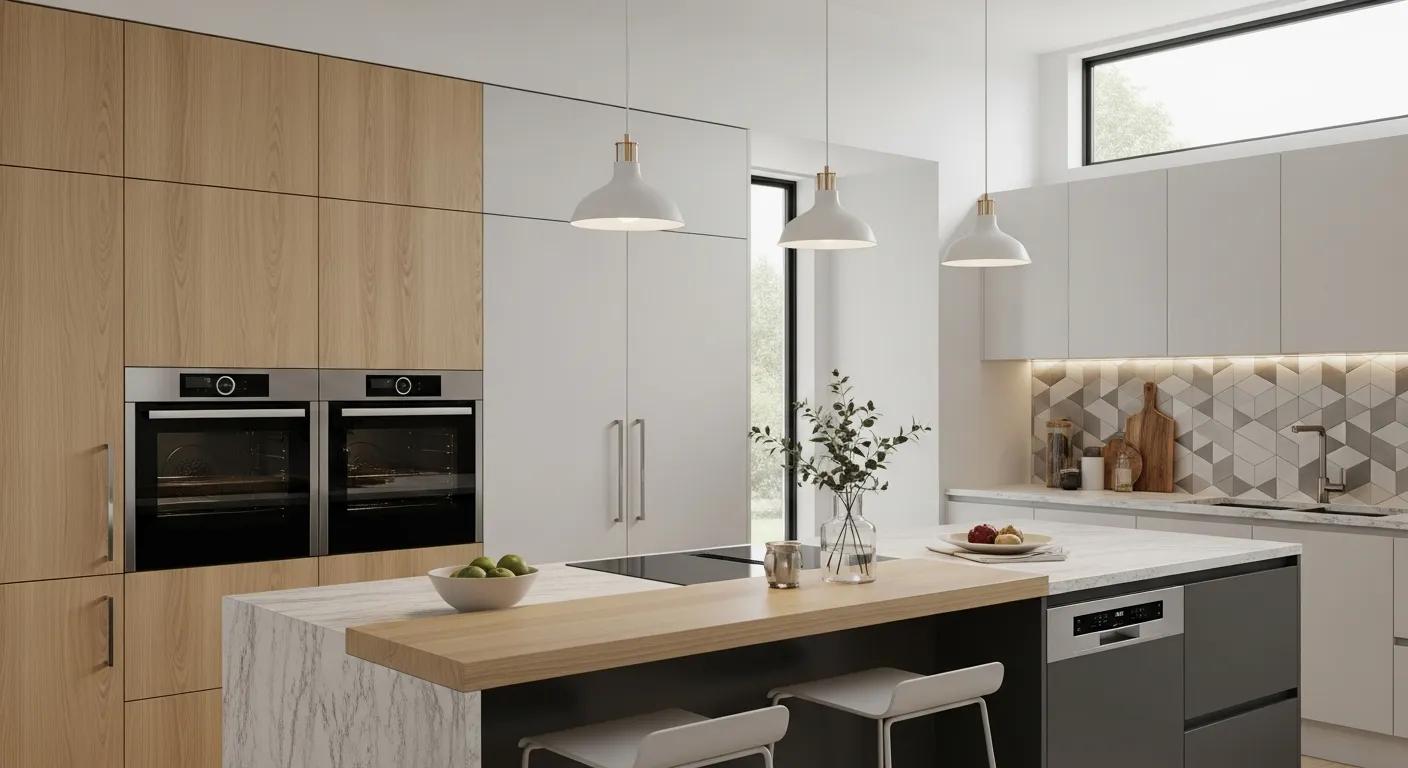
The key kitchen trends for 2025 blend durability, tactile materials and practical tech to suit Devonport’s coastal lifestyle and changeable weather. Mixed-material schemes pair timber joinery with engineered stone benchtops for warmth and resilience, while biophilic touches — more plants and natural light — soften compact or open-plan layouts. Statement lighting and bold splashbacks add personality without major structural work, and smart appliances cut energy use and simplify daily tasks. Together, these trends create kitchens that feel modern and usable for Northern Tasmanian homes, and they naturally shape the style directions homeowners pick when refining their brief.
Devonport owners tend to favour a few distinct style directions that reflect local tastes and property types. Each approach trades off appearance, upkeep and investment in different ways — the right choice depends on how the kitchen will be used every day.
- Mixed‑material modern: Timber cabinetry paired with quartz or engineered stone benchtops for a warm, hard‑wearing finish.
- Modern farmhouse: Soft shaker doors and open shelving combined with durable flooring — a practical choice for family homes.
- Dark, moody kitchens: Deep cabinetry tones with brass or matte‑black hardware for a high‑contrast, luxe look.
Those style choices influence layout and finish decisions; the next section explains how smart technology and sustainable materials are shaping local renovations.
Which Modern Kitchen Styles Are Popular in Devonport?
Modern minimalist layouts are popular in Devonport for their clean lines and space-saving appliances, which suit smaller coastal lots and open‑plan conversions. Older federation homes often take a modern‑farmhouse approach, pairing traditional door profiles with contemporary hardware to keep character while improving function. Larger properties frequently choose luxury or dark, moody schemes, prioritising stone islands and integrated appliances with bespoke joinery and tailored storage. Each style needs specific material pairings — timber veneers with oil‑finished seals for warmth, or engineered stone for low‑maintenance durability — and should be matched to household routines to maximise lifespan and ease of care.
How Are Smart Technology and Sustainable Materials Shaping Kitchen Renovations?
Smart technology and sustainably chosen materials are shaping design decisions and lifecycle costs in Devonport projects. Homeowners increasingly specify energy‑efficient ovens, induction cooktops and app‑enabled ventilation to reduce running costs, while smart lighting and sensors improve usability in open layouts. Sustainable choices — recycled timber, responsibly sourced veneers and low‑VOC coatings — are used to lower embodied energy and support healthier indoor air. Making these choices early affects cabinetry layout, service access and benchtop selection, so they play a practical role in setting budgets and timelines for the renovation.
Understanding Your Investment: Devonport Kitchen Renovation Costs
The investment for a kitchen renovation in Devonport depends on scope, materials and any structural work; we cater to a range of budgets, from small refreshes to full luxury transformations. Minor updates — resurfacing, new hardware and a fresh paint — are more budget-friendly. Mid‑range remodels that replace cabinets and benchtops represent a mid-range investment due to custom joinery and upgraded appliances. Full luxury renovations involving structural reconfiguration, bespoke joinery, premium stone benchtops and integrated technology are a premium investment. Understanding these tiers helps homeowners prioritise spending and understand the investment levels involved.
The main factors influencing your investment in Devonport are material quality, the amount of custom joinery, labour and contractor coordination, structural work, and appliance specification. Local labour rates and supplier availability in Northern Tasmania influence lead times and final costs, and permit or inspection requirements can add time and expense. Budgeting for contingencies and considering staged works can help manage cash flow and minimise disruption.
- Materials and finishes: Premium benchtops and bespoke joinery add substantially to costs.
- Structural changes: Moving walls or services increases both time and expense.
- Appliances and technology: Integrated smart appliances and upgraded extraction raise budgets.
Before you finalise a scope, an on‑site scoping visit will confirm existing conditions and help you understand the investment required. Local professionals can provide tailored estimates and advise on phasing to control cost. Below is a general guide to typical project scopes and timelines to help place your project in context.
Introductory table explaining typical investment levels and timelines for Devonport kitchen renovation scopes.
What Factors Influence Your Kitchen Renovation Investment in Devonport?
Material choices, the complexity of custom joinery, labour availability and any required structural work are the main factors influencing your investment in Devonport projects. Timber joinery versus engineered stone benchtops differ in unit cost and installation time; bespoke storage solutions add workshop hours and fit‑off time. Labour coordination and specialist trades are affected by local supplier lead times and seasonal demand in Northern Tasmania, which can extend schedules and raise temporary accommodation or storage costs. Understanding how these factors combine helps you prioritise upgrades that offer the best long‑term value.
These factors influencing your investment shape budgeting strategy and how homeowners sequence work, which leads to practical budgeting steps and contingency planning for Northern Tasmanian renovations.
How to Budget Effectively for Your Kitchen Remodel in Northern Tasmania?
Start budgeting with a clear scope, detailed discussions with experienced professionals and a contingency reserve for the surprises often found in older homes. Prioritise the fixed elements that influence value — layout, plumbing, electrics and benchtop durability — and allow flexibility on decorative items such as finishes or lighting that can be deferred. Set aside 10–20% of the project sum as contingency for unexpected discoveries, and plan cash flow for deposits, staged payments and required inspections. An on‑site quote is the most reliable way to understand your investment; a local scoping visit helps keep your project on track and provides a realistic delivery timeline for Devonport conditions.
- Budget checklist: Track key items and payment timing to avoid surprises.
- Phasing tips: Consider staging works to spread the cost and reduce disruption.
- Contingency rule: Reserve at least 10% of the total budget for unforeseen items.
A disciplined budgeting approach and early engagement with local specialists will reduce surprises and keep your project on schedule and within the agreed financial envelope.
What Are the Best Custom Kitchen Joinery and Cabinetry Options in Devonport?
Custom joinery improves function and longevity by tailoring storage and workflows to a home’s footprint and family habits, so it’s a common priority in Devonport renovations. Bespoke cabinetry lets you integrate appliances, hidden storage and engineered carcasses designed to cope with coastal humidity when the right materials and finishes are chosen. Balancing durability, maintenance and investment is critical; the table below compares common joinery substrates to help you decide which best suits your project and local climate.
Introductory table comparing joinery materials and attributes for Devonport kitchens.
How Does Custom Joinery Enhance Kitchen Functionality and Style?
Custom joinery turns awkward corners and non‑standard footprints into efficient storage that streamlines workflow and reduces clutter. Tailored features — appliance garages, deep pan drawers, integrated recycling and pull-out larders — optimise daily routines and keep benchtops clear, while quality hardware improves longevity and performance. Bespoke joinery also lets you align visible surfaces with interior architecture, using veneers or painted finishes to create cohesion with adjacent living spaces. Deciding on custom joinery early ensures cabinetry dimensions and service locations are coordinated with plumbing, electrical and appliance requirements.
Which Materials and Finishes Are Ideal for Devonport Kitchens?
For Devonport’s coastal conditions, engineered stone benchtops and moisture‑resistant plywood carcasses provide a practical balance of durability and low maintenance. Timber veneers and sealed solid timbers add warmth and texture but need sealed finishes and periodic care to manage humidity‑related movement. Low‑VOC paints and hardwearing hardware lower ongoing maintenance and improve indoor air quality. Choose finishes that reflect your household — easy‑clean surfaces for busy families or premium lacquered panels for formal spaces — to ensure the kitchen performs for years, not months.
How Does Mirage Building and Construction Manage Kitchen Renovations in Devonport?
Mirage Building and Construction brings Northern Tasmania experience to kitchen renovations, combining design coordination, project management and skilled trades to deliver projects from concept through to handover. We prioritise clear scoping and staged planning to align design intent with practical budgets and realistic schedules — crucial in Devonport, where supplier lead times and site conditions affect delivery. Mirage’s residential expertise also supports commercial fit‑outs, enabling efficient trade coordination, code compliance and scalable teams for larger workplace projects. For homeowners and businesses seeking tailored advice, Mirage offers on‑site scoping visits and customised estimates to move ideas into an agreed scope of work.
Mirage uses a defined process focused on communication, approvals and quality control to reduce uncertainty and manage timelines. That structured approach delivers repeatable results across bespoke home kitchens and commercial fit‑outs, bridging residential craftsmanship with the rigour needed on larger projects. The step‑by‑step summary below outlines core phases and client touchpoints so you can see how a typical project flows from first contact to completion.
What Is the Step-by-Step Kitchen Renovation Process with Mirage Building?
Mirage’s process follows clear phases to keep projects transparent and controllable. An initial consultation and site assessment establish scope and constraints, leading to design development and material selection that match the client’s brief. Necessary approvals and permits are arranged while detailed quoting and scheduling set expectations for start dates and milestones. The build phase coordinates trades, deliveries and quality checks, then finishing works, client walkthroughs and a formal handover, complete with care and maintenance guidance, complete the project. Each stage includes client sign‑off points and a projected timeline to keep the renovation predictable and aligned with the homeowner’s needs.
This structured process carries over to commercial fit‑outs by ensuring documentation, scheduling and quality assurance are consistent across project types, supporting predictable outcomes on larger jobs.
How Does Residential Renovation Expertise Translate to Commercial Fit-outs?
Residential renovation skills scale to commercial fit‑outs through disciplined project management, custom joinery workshops and reliable subcontractor networks. Techniques used for bespoke cabinetry and finishes in homes — accurate templating, durable material choices and strict quality control — are applied at scale in commercial settings to meet codes and client expectations. Mirage leverages residential craftsmanship to deliver commercial work with the same attention to detail while adding planning for compliance, logistics and phased occupancy where needed. This crossover means businesses benefit from residential‑grade finishes combined with commercial project governance.
For organisations looking for qualified fit‑out partners, Mirage’s combined residential and commercial experience delivers tailored solutions and accountable project delivery.
What Sustainable and Eco-Friendly Kitchen Renovation Options Are Available in Devonport?
Sustainable kitchen renovations in Devonport focus on low‑embodied‑energy materials, energy‑efficient appliances and waste‑reduction strategies on site to lower lifetime costs and environmental impact. Choosing recycled or responsibly sourced timber, low‑VOC coatings and energy‑rated appliances supports healthier indoor environments and reduces long‑term running costs. Design moves such as maximising natural light, specifying efficient ventilation and installing induction cooking further cut energy use. These strategies deliver environmental benefits and practical value for homeowners preparing properties for long‑term living or sale.
Below is a comparison table showing common sustainable materials and their environmental attributes and benefits for Devonport projects.
Which Eco-Friendly Materials Are Best for Devonport Kitchens?
Locally available recycled timber and certified veneers paired with engineered stone or recycled‑content benchtops strike a practical balance of sustainability and durability for Devonport homes. Low‑VOC paints and sealants reduce indoor pollutants, which is particularly valuable in tightly sealed open‑plan houses. Moisture‑resistant substrates for carcasses lower the risk of premature failure in coastal environments and reduce lifetime replacement needs. Sourcing materials with clear provenance and repairable finishes extends product life and reduces whole‑of‑life environmental impact.
How Can Sustainable Design Improve Your Kitchen’s Function and Value?
Sustainable design cuts operating costs via energy‑efficient appliances and smarter layouts that minimise waste and improve workflow, delivering both performance and resale appeal. Buyers increasingly value low‑maintenance, sustainably specified kitchens, so eco‑friendly choices can support marketability and long‑term return on investment. Thinking in lifecycle terms — selecting durable materials and designing for repairability — reduces replacement cycles and total cost of ownership over decades. Integrating sustainable features at the planning stage ensures they sit seamlessly within the overall design, preserving both aesthetic quality and functional performance.
Where Can You See Examples of Luxury Kitchen Renovations in Tasmania?
Luxury kitchens in Tasmania stand out for meticulous custom joinery, premium benchtop materials and integrated appliances that combine seamless function with refined aesthetics. Signature elements often include large islands with engineered or honed stone tops, concealed storage that preserves clean sightlines, and premium hardware and fixtures built to last. Viewing local project galleries and case studies helps homeowners visualise premium cabinetry, appliances and finishes in situ and gives practical reference points when briefing designers. These examples clarify finish standards and help set realistic specifications for similarly ambitious renovations.
What Are the Signature Features of Luxury Kitchens in Devonport?
Signature luxury features include full‑height custom cabinetry, integrated appliances for uninterrupted surfaces, waterfall islands in high‑grade engineered stone and layered task and ambient lighting. Bespoke joinery often includes dovetailed drawers, soft‑close hardware and integrated organisation systems tailored to client routines. High‑quality tapware and extraction systems complete the functional suite, so performance matches appearance. Achieving these finishes requires close coordination across design, joinery and installation to deliver a cohesive result that performs under daily use.
How Do Client Testimonials Reflect Quality and Satisfaction?
Client feedback typically highlights clear communication, on‑time delivery and durable finishes as hallmarks of a successful project. Testimonials often praise craftsmanship, effective storage solutions and the improved liveability of layouts after renovation. These recurring themes show that well‑managed projects deliver both aesthetic and functional benefits that matter to homeowners, and they underline the value of hiring experienced teams who turn design intent into reliable outcomes. Positive client experiences also bolster confidence when scaling residential practices to commercial fit‑outs, since accountability and quality control translate across project types.